Retail stores are no longer just places where transactions happen.
They are becoming sales channels, fulfilment hubs, return points, service centres, and customer-conversion touchpoints.
This shift is changing what retailers need from their systems.
A store can no longer operate as one channel while ecommerce, inventory, order management, CRM, and fulfilment work somewhere else. The customer journey is too connected. The operational pressure is too high. The cost of fragmented execution is too visible.
That is why store-led unified commerce matters.
It moves retailers away from channel-by-channel operations and toward one connected operating model where POS, OMS, inventory, customer data, and fulfilment share the same source of truth.
The timing matters.
Global retail technology spend is expected to reach $388 billion by 2026, with 46% allocated to unifying siloed systems.
That investment points to a clear priority.
Retailers are not just buying more tools.
They are trying to connect the tools that decide whether the business can sell, fulfil, serve, and respond with accuracy.
What Is Store-Led Unified Commerce?
Store-led unified commerce is a retail operating model where the store is not treated as a separate channel.
Instead, the store becomes part of one enterprise-wide execution layer.
In this model, the store can:
- Sell products that are not physically available through endless aisle
- Fulfil online orders through BOPIS and ship-from-store
- Process online returns in-store through BORIS
- Support customers with digital service tools
- Use real-time inventory and order data to make better decisions
This is different from multichannel retail.
In multichannel retail, each channel may work, but the systems behind them often remain separate.
In unified commerce, POS, OMS, inventory, customer data, pricing, promotions, and fulfilment operate from one connected view.
That connected view matters because customer expectations do not follow channel boundaries.
A customer may discover a product online, visit the store, ask an associate about availability, place an order in-store, receive it from another location, and return it through a different store.
The experience feels simple only when the execution layer is connected.
Why Stores Are Becoming Fulfilment Nodes
The store is becoming a critical part of ecommerce fulfilment.
This is not only a customer convenience trend. It is an operational cost and speed advantage.
Target reportedly fulfils around 80% of online orders from store inventory, supporting a roughly 40% drop in fulfilment costs and a 90% reduction in same-day fulfilment costs. Walmart also fulfils more than 50% of ecommerce orders from local stores.
These examples show why store-origin fulfilment is gaining momentum.
The store is closer to the customer.
The inventory is already positioned in the network.
The fulfilment path can be faster than shipping every order from a central distribution centre.
Broader pilot studies also show the operational upside. When stores serve as fulfilment nodes, retailers can see:
- 16% to 28% reduction in last-mile delivery time
- 4 to 9 percentage point increase in on-time fulfilment
- 20% to 35% drop in stock-out rates
These gains do not come from the store alone.
They come from the store being connected to real-time inventory, order orchestration, and fulfilment logic.
A store cannot act as a fulfilment node if the system does not know what stock is available, where the item should be sourced from, or how the order should move.
Unified Commerce Is Still a Maturity Gap
The opportunity is significant because most retailers have not reached full maturity.
Research suggests that only 7% of retailers reach true unified-commerce maturity.
That is a small number compared with the scale of investment and customer expectation.
It also explains why many retailers still struggle with the same operational problems:
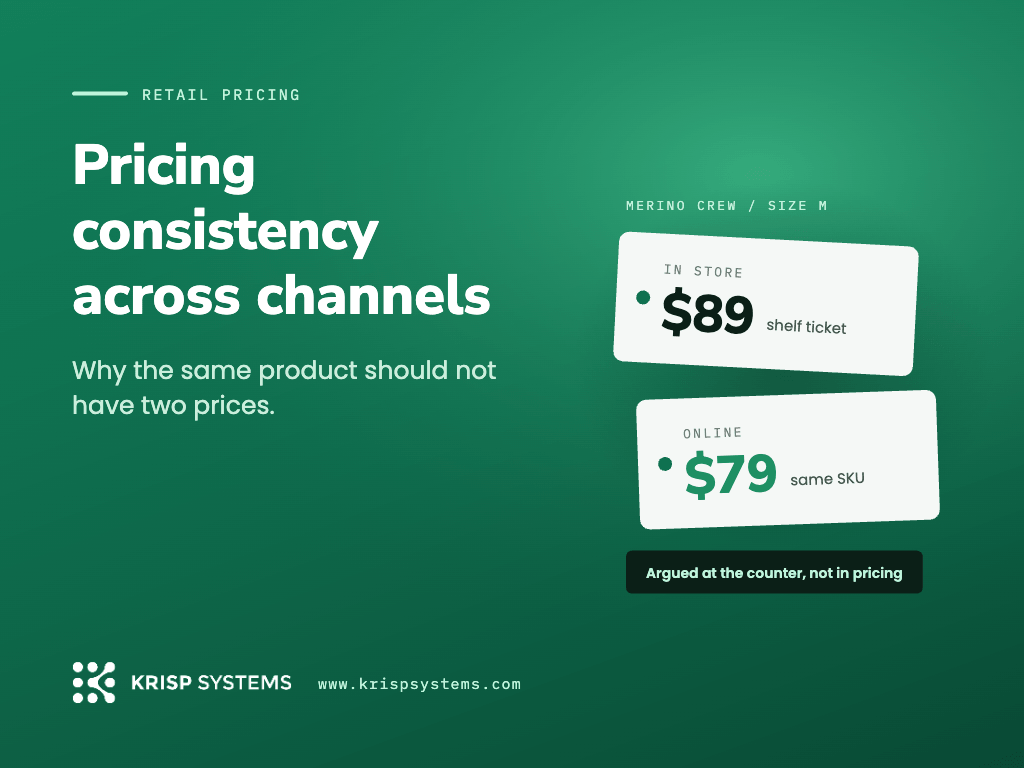
Inventory looks different online and in-store.
Orders are difficult to route across locations.
Store teams cannot always see customer or order history.
Returns create slow updates across systems.
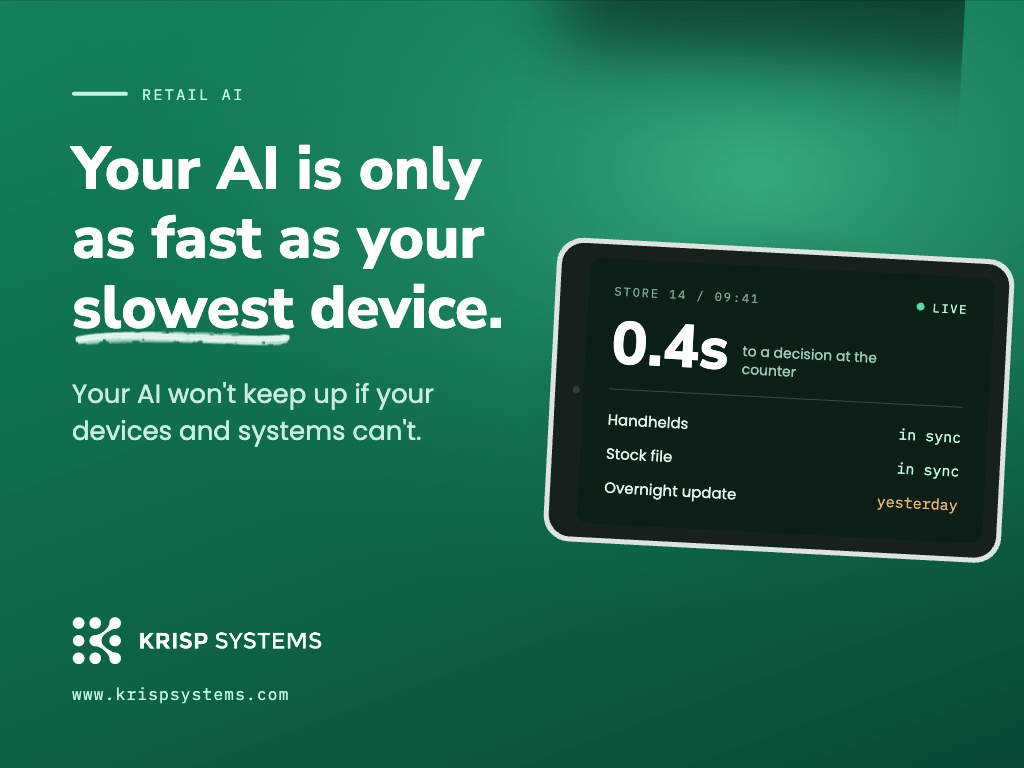
AI tools cannot make reliable decisions because the data underneath is fragmented.
The maturity gap is not only technical.
It is operational.
Retailers need systems that allow the business to act from one shared version of reality.
The Commercial Case for Unified Execution
Unified commerce is not just a cleaner technology architecture.
It can support stronger commercial performance when execution improves.
Unified-commerce leaders are reported to achieve 2× faster revenue growth and $17 million to $25 million in incremental revenue per $1 billion in sales.
That result is not caused by one feature.
It comes from reducing friction across the retail operating model.
When inventory is more accurate, retailers can make better availability promises.
When orders are routed more intelligently, fulfilment becomes faster and less expensive.
When stores are connected to digital journeys, they can capture more demand instead of passing it to another channel.
When returns update stock quickly, the product can re-enter the selling cycle sooner.
Unified commerce creates value by helping the whole business execute with greater consistency.
Why Real-Time POS and OMS Are Non-Negotiable
Store-led unified commerce depends on connected POS and OMS execution.
The POS is no longer only a checkout system.
It becomes the store-level commerce gateway. It captures transactions, supports endless aisle orders, connects customer activity, and helps associates serve customers in the moment.
The OMS is the orchestration layer.
It decides how orders move across the network. It supports ship-from-store, BOPIS, split shipments, exception handling, and fulfilment routing based on availability, proximity, cost, and service promise.
Both systems need accurate inventory.
High-performing retailers typically need at least 95% SKU-location inventory accuracy to make reliable fulfilment promises and reduce cancellations.
That benchmark is important because unified commerce depends on trust.
If the system says an item is available, the associate, customer, and fulfilment team need confidence that the promise can be kept.
Without real-time POS, OMS, and inventory alignment, store-led unified commerce becomes difficult to scale.
The store may accept demand it cannot fulfil.
The ecommerce channel may overpromise.
The fulfilment team may route orders inefficiently.
The customer may experience delays, cancellations, or inconsistent service.
Where Store-Led Unified Commerce Wins
Store-led unified commerce becomes most valuable when it improves the moments that directly affect sales, fulfilment, and customer trust.
1. Endless Aisle: Saving the Sale
A customer wants an item that is not available in that store.
With connected POS and OMS, the associate can check inventory across stores, warehouses, or distribution centres and place the order in the same selling moment.
Endless aisle can reduce lost in-store sales by around 59% when out-of-stocks occur.
That makes endless aisle more than a range extension strategy.
It becomes a saved-sale workflow.
2. Ship-from-Store: Faster and More Cost-Aware Fulfilment
When orders are routed to the nearest store shelf or backroom stock, retailers can reduce delivery distance and use inventory already positioned closer to customers.
Ship-from-store can reduce last-mile delivery costs by 30% to 50% compared with distribution-centre-only fulfilment.
This only works when the OMS can route intelligently and the POS or store system can support store-level execution.
3. BOPIS and BORIS: Convenience That Depends on Accuracy
Buy Online, Pick Up In Store and Buy Online, Return In Store both rely on connected systems.
For BOPIS, the customer expects the item to be available, reserved, and ready.
For BORIS, the returned item needs to update inventory, order history, and future availability quickly.
Without unified POS and OMS, these journeys create extra work for store teams.
With unified execution, they become part of a smoother customer experience.
4. Returns Anywhere: Faster Recovery of Stock
Returns are not only a service issue.
They are an inventory recovery issue.
When an online purchase is returned in-store, the system needs to update order status, stock availability, and future fulfilment cycles.
A connected operating model helps retailers move returned inventory back into saleable visibility faster.
5. AI-Powered Decisioning: Better Tools Need Better Data
AI can support forecasting, inventory rebalancing, dynamic pricing, fulfilment routing, and customer service.
But AI depends on consistent, accurate, real-time data.
If POS, OMS, inventory, and fulfilment systems are fragmented, AI tools may surface incomplete or unreliable recommendations.
Store-led unified commerce creates the data foundation AI needs to work more effectively.
This is where AI-readiness becomes practical.
It starts with clean execution data.
Making Store-Led Commerce Work in Practice
Store-led unified commerce only works when the store is connected to the rest of the retail operation.
The store needs to see what can be sold.
The OMS needs to decide how the order should move.
Inventory needs to update across every relevant location.
Customer and order activity need to stay visible, whether the journey starts online, in-store, or somewhere in between.
This is where the technology foundation matters.
Krisp Systems brings POS and OMS together into one connected retail platform, helping retailers manage transactions, orders, inventory, fulfilment, and store activity from a clearer operational view.
That connected foundation supports the store as more than a checkout point.
It allows stores to sell beyond the shelf, fulfil online demand, support returns, and serve customers with better visibility across the wider business.
The value is not in adding another disconnected system.
The value is in giving stores, fulfilment teams, and retail leaders one stronger foundation for daily execution.
Store-Led Unified Commerce Is the Next Retail Operating Model
The Store Is Becoming the Operating Core
The store is not becoming less important.
It is becoming more operationally important.
It now plays a role in ecommerce fulfilment, customer service, returns, endless aisle, inventory utilisation, and AI-ready retail execution.
But stores can only play that role well when the systems behind them are connected.
Unified commerce gives retailers the foundation to sell, fulfil, return, and serve from the same source of truth.
In 2026, the strongest retailers will not be the ones with the most channels.
They will be the ones that connect those channels into one operating core.
Because unified commerce is not just about improving the customer journey.
It is about making retail execution work from the same truth.
FAQs
What is store-led unified commerce?
Store-led unified commerce is a retail operating model where stores are connected to POS, OMS, inventory, customer data, and fulfilment systems. This allows stores to sell, fulfil, return, and serve as part of one unified retail operation.
How is unified commerce different from omnichannel retail?
Omnichannel retail focuses on giving customers multiple ways to shop. Unified commerce connects the systems behind those channels so inventory, orders, customers, pricing, and fulfilment work from the same source of truth.
Why are stores important in unified commerce?
Stores are now part of the fulfilment network. They can support endless aisle, BOPIS, ship-from-store, returns, and customer service when connected to real-time systems.
Why do POS and OMS need to work together?
POS captures store-level transactions and customer interactions. OMS manages fulfilment decisions across stores, warehouses, suppliers, and delivery paths. Together, they help retailers sell and fulfil from one connected operating view.
What inventory accuracy is needed for unified commerce?
High-performing unified commerce models typically need at least 95% SKU-location inventory accuracy. This helps retailers make reliable availability promises and reduce cancellations.
How does store-led unified commerce support AI?
AI works better when it can access accurate and consistent data. Unified commerce gives AI tools a cleaner foundation for forecasting, fulfilment routing, inventory decisions, and customer interactions.
What is the role of Krisp Systems in unified commerce?
Krisp Systems helps retailers connect POS, OMS, inventory, orders, fulfilment, and store activity into one operational foundation. This supports store-led execution across sales, fulfilment, returns, and customer service.
Want to make your stores part of a more connected commerce model? Talk to the Krisp Systems team about unifying POS, orders, inventory, and fulfilment into one retail foundation. [Talk to an expert ]