When Peak Season Ends, the Work Continues
For many retailers, the busiest period does not end when peak trading slows. It shifts.
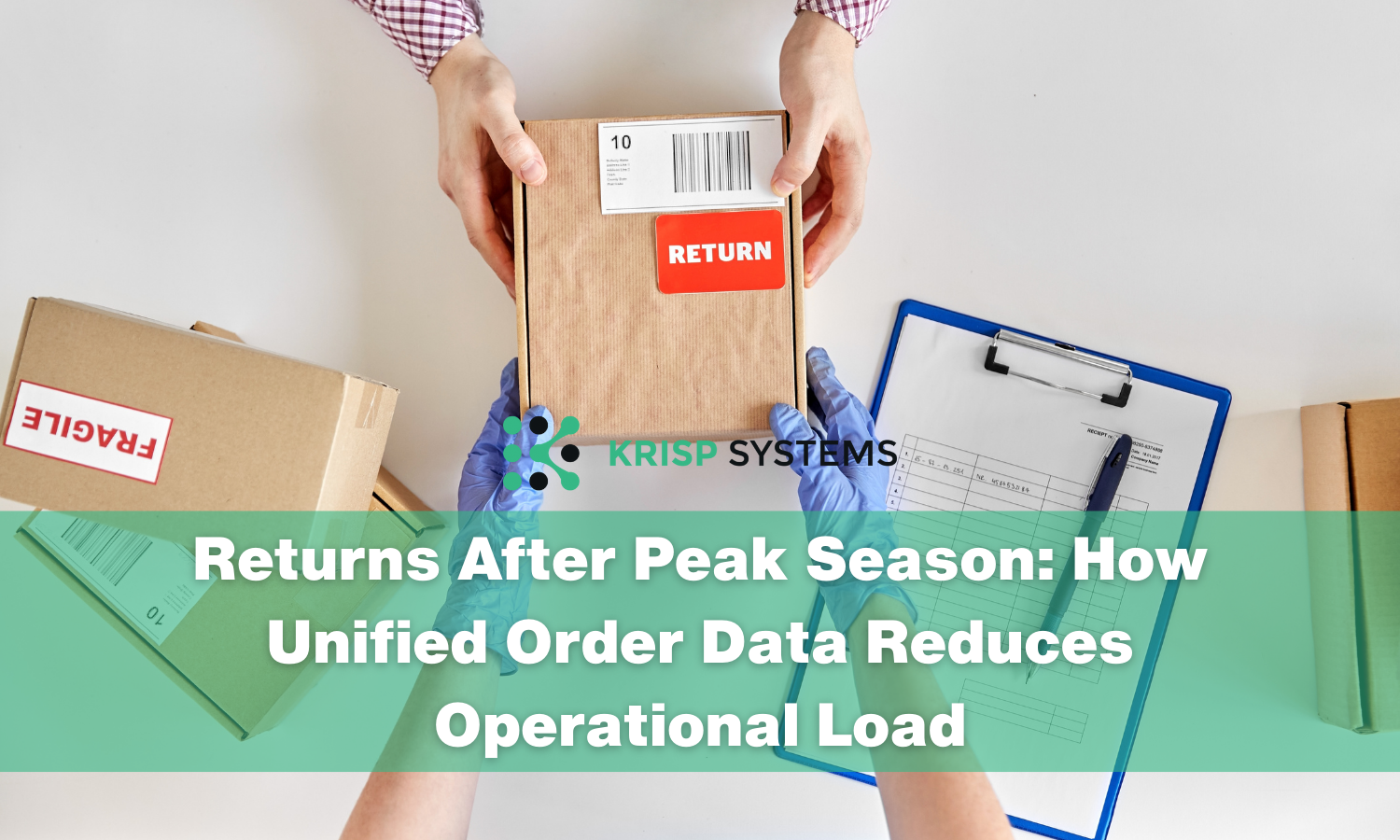
After the holiday rush comes a surge of returns, exchanges, and customer enquiries.
This post-peak phase places significant pressure on store teams, fulfilment staff, and customer service. When order data is fragmented across systems, even simple returns can become slow, manual, and error prone.
Unified order data changes this experience. By bringing all orders, channels, and fulfilment details into one system, retailers can manage returns with clarity, speed, and far less operational strain.
Why Returns Create Operational Load After Peak Season
Returns are not just a customer experience issue. They are an operational one.
After peak season, retailers often face:
- High volumes of in-store and online returns
- Customers returning items to different locations than where they were purchased
- Manual lookups across POS, eCommerce, and order systems
- Delays in refund processing and stock updates
- Increased staff workload during an already busy reset period
When systems are disconnected, each return becomes a small investigation. Multiply that by hundreds or thousands of transactions, and the operational load grows quickly.
The Role of Unified Order Data
Unified order data means every order is recorded, tracked, and updated in one place.
Regardless of where a purchase was made or how it was fulfilled, the full order history is accessible to authorised teams.
With unified order data, retailers gain:
- A single view of each order and its lifecycle
- Real-time updates on returns, refunds, and exchanges
- Immediate visibility into payment and fulfilment status
- Accurate stock adjustments across locations
This removes the need for manual reconciliation and reduces reliance on separate systems during high return periods.
How Krisp Systems Simplifies Post-Peak Returns
Krisp Systems unifies order management across channels, creating a shared data layer for stores, warehouses, and customer service teams.
When a return occurs, staff can:
- Locate the original order instantly
- See fulfilment and payment details without switching systems
- Process refunds or exchanges accurately
- Update inventory in real time
Because the Order Management System is unified with in-store and online activity, returns no longer create data gaps. They become part of a continuous, traceable workflow.
This reduces queue times in store and shortens resolution time for customers contacting support.
Reducing Manual Work for Store and Support Teams
One of the biggest benefits of unified order data is the reduction in manual work.
Without unified data, teams often rely on:
- Spreadsheets to track return status
- Separate POS and eCommerce records
- Manual stock adjustments
- Back-and-forth communication between departments
Krisp Systems removes these steps by keeping return data connected to the original order. Staff spend less time searching and correcting, and more time serving customers.
Operational load decreases not because teams work faster, but because systems remove unnecessary work.
Improving Inventory Accuracy After Returns
Post-peak returns can significantly impact inventory accuracy. Items may sit in limbo between return counters, warehouses, and system updates.
Unified order data ensures that returned items are:
- Logged immediately
- Reflected accurately in available stock
- Visible to both store and online channels
This helps retailers rebalance inventory faster, identify resale opportunities, and avoid stock distortions that affect replenishment decisions.
Accurate inventory after peak season sets a stronger foundation for the next trading cycle.
Creating a Better Customer Experience During Returns
Customers judge retailers heavily on how returns are handled. Slow refunds, unclear processes, or inconsistent policies damage trust.
With unified order data, retailers can offer:
- Faster return processing
- Clear communication on refund timelines
- Flexible return locations
- Consistent policies across channels
When staff have immediate access to order history, customers feel confident that their issue will be resolved without friction.
Preparing for the Next Peak with Better Data
Post-peak returns are not just a challenge to manage. They are a source of insight.
Unified order data allows retailers to analyse:
- Return rates by product or category
- Fulfilment methods linked to higher returns
- Timing and location of return activity
- Operational bottlenecks during peak periods
These insights help teams improve product descriptions, adjust fulfilment strategies, and refine return policies before the next peak season arrives.
Unified Order Data Reduces More Than Returns
Returns after peak season will always exist. The difference lies in how much strain they place on the business.
With unified order data, retailers reduce operational load, improve accuracy, and deliver a smoother experience for both customers and staff.
Krisp Systems provides the structure needed to manage post-peak complexity without adding more tools or manual processes.Simplify returns and reduce operational strain.
See how Krisp Systems unifies order data to help retailers manage post-peak returns with clarity and control.
Explore Unified Order Management
Frequently Asked Questions (FAQs)
1. What is unified order data?
Unified order data means all orders, regardless of channel or fulfilment method, are managed in a single system with a complete order history.
2. Why do returns create operational challenges after peak season?
High return volumes combined with disconnected systems lead to manual lookups, delayed refunds, and inaccurate stock updates.
3. How does unified order data reduce staff workload?
It removes the need to switch between systems, manually reconcile orders, or track return status separately.
4. Can unified order data improve inventory accuracy?
Yes. Returned items are updated in real time, ensuring stock levels remain accurate across locations and channels.
5. Is unified order data only useful during peak season?
No. While it is critical during post-peak periods, unified order data improves operations year-round.Planning improvements for 2026 operations?
Talk to the Krisp Systems team and see how unified order data supports scalable, efficient retail operations.
Contact the Krisp Team