Most people are members of more loyalty programs than they can name. The cards are in the wallet, the points quietly accrue, and a large share of them are never spent.
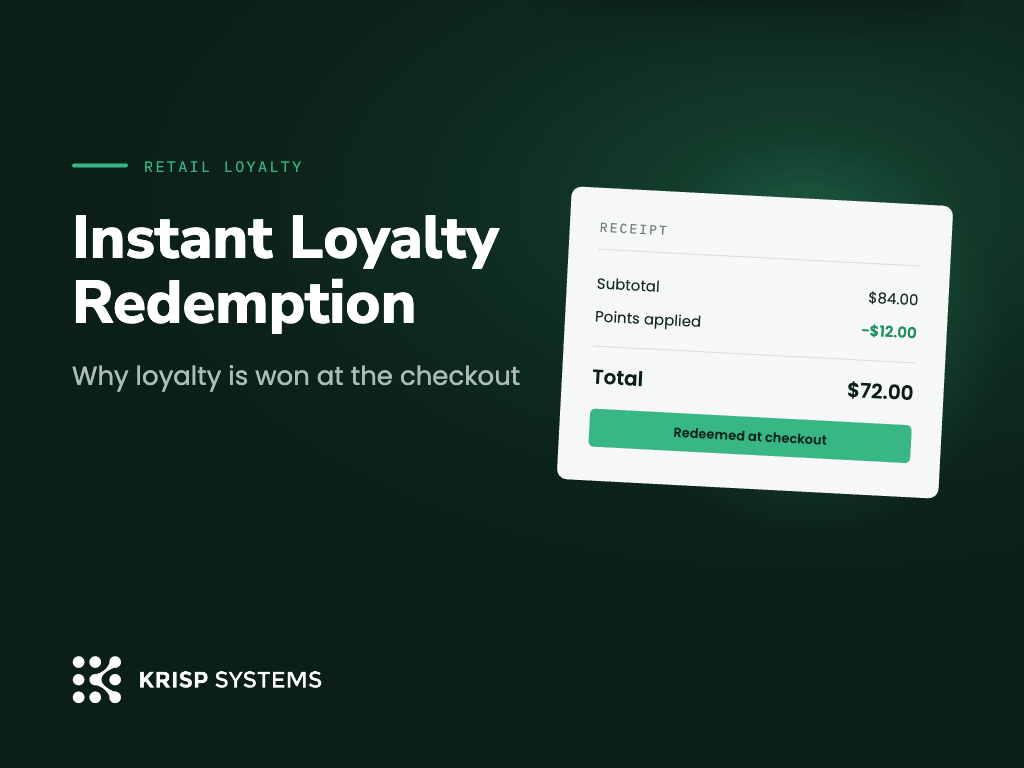
The value in a loyalty program is not created when someone joins. It is created when they redeem, when a pile of abstract points becomes money off something they actually want. Bunnings has just moved that moment to the most powerful place it can happen: the checkout.
Everyone is enrolled. Almost no one is engaged.
Enrolment is not the problem in retail loyalty. Overload is.
Boston Consulting Group found that people now belong to more than 15 loyalty programs on average, yet engagement has fallen 10% and loyalty has dropped 20% since 2022. Members are signing up for more and caring about less. It does not help that rewards often feel out of reach. In Antavo’s 2025 loyalty report, the single most requested feature, named by 40.7% of members, was simply that points should not expire.
A point a customer cannot easily spend is not a reward. It is a promise you have not kept.
The value is in redemption, not sign-up
This is where the commercial case gets clear. McKinsey found, in 2021, that redeemer members spend 25% more than members who are enrolled but inactive, and that top-performing programs can lift revenue from customers who redeem points by 15 to 25% a year.
The pattern is consistent. It is not enrolment that moves spend, it is activity, and above all redemption.
| Member type | How they engage | Relative spend |
|---|---|---|
| Enrolled but inactive | Signed up, rarely redeems | Baseline |
| Active member | Uses the program | 10% more |
| Redeemer | Actually redeems points | 25% more |
The lever is not more sign-ups. It is turning enrolled-but-inactive members into people who actually redeem. McKinsey is blunt about what gets in the way, naming a clunky redemption process as a direct cause of customer frustration, and simple redemption as a habit of the best programs. If redeeming is hard, the points sit unused and the value never lands.
Bunnings moved redemption to the moment of purchase
Bunnings has taken that idea to its logical conclusion. After a Western Australian trial, it expanded Flybuys instant redemption to all its stores nationally, as Inside Retail reported in August 2025. Members now redeem points for money off at the checkout, from $10 up to $200 off a transaction, with every 2,000 points worth $10.
Flybuys is not Bunnings’ own program. It is a coalition scheme shared across Coles, Kmart, Officeworks, Bunnings and others, which is part of what makes this notable. Coles Group reported 9.9 million active Flybuys members in its 2025 results, along with a 13.3% increase in customers redeeming points.
The trial response was strong. Bunnings reported that 87% of members who redeemed at the checkout found it easy, and 63% said it would encourage them to shop and redeem again. Instant redemption did not create the demand. It uncovered it.
Why instant redemption is a systems problem
Picture two customers in the same queue. One takes $40 off a $150 order in a couple of taps and leaves feeling ahead. The other has the points, but the balance will not load, the discount will not apply, and the line backs up while a manager is called. Same program, same points, opposite outcome.
The difference is what happens behind the screen. Redeeming points as money off at the till, in real time, is not a marketing feature. It is a systems one. In the moment before a customer taps to pay, the checkout has to do all of this at once:
| Step | What the checkout must do, in real time |
|---|---|
| 1 | Identify the member |
| 2 | Confirm the current points balance |
| 3 | Convert points to a dollar value |
| 4 | Apply that value against the correct price |
| 5 | Record and reconcile the redemption |
Every step happens live, before payment. Bunnings adds a real-time control, requiring an app-generated one-time code for redemptions over $100 or repeated on the same day.
All of it only works when loyalty, POS, and pricing are talking to each other live. A broken redemption is worse than none, because it fails in front of the customer at the exact moment you promised value.
Making it work without a Bunnings budget
Most retailers are not Bunnings, and they do not need to be. What they need is a checkout that can apply loyalty accurately and instantly, including programs they do not run themselves.
Krisp Systems helps retailers connect POS, orders, inventory, and loyalty into one operational view, so points can be applied as real value at the point of sale and reconciled correctly afterwards. It is designed to support loyalty at the till and to bring third-party programs into the checkout, so a smaller retailer can offer the same on-the-spot redemption that shoppers are now learning to expect.
The goal is not another program to enrol in. It is to make the program you already have pay off, at the moment it matters most.
The practical takeaway
Loyalty is not won at sign-up. It is won at redemption, and the checkout is where redemption either delights a customer or lets them down.
As instant redemption becomes normal at the biggest retailers, easy redemption stops being a nice extra and becomes the baseline. The retailers who can apply points accurately and instantly at the till will turn dormant balances into repeat visits. The ones who cannot will keep issuing points that quietly go to waste, and wondering why the program is not working.
FAQs
What is instant loyalty redemption?
It is letting a customer redeem loyalty points for money off at the checkout, on the spot, rather than saving up for a separate reward or voucher. Bunnings, for example, now lets Flybuys members take money off a purchase at the till.
Why does redemption matter more than sign-up?
Because redemption is where value is created. McKinsey found redeemer members spend 25% more than enrolled but inactive members, so turning sign-ups into active redeemers is what drives the return.
Why do so many loyalty points go unused?
Often because redeeming is too hard or the points feel out of reach. Members belong to many programs, engagement is falling, and features like point expiry add friction, so balances sit idle.
What does instant redemption require technically?
A connected checkout. The POS has to verify the member, convert points to value, apply it to the correct price, and record it in real time, which means loyalty, POS, and pricing must be integrated.
Can smaller retailers offer instant redemption?
Yes, if their POS can apply loyalty accurately and in real time, including third-party programs. The barrier is not scale, it is whether the systems at the checkout are connected.
Want your loyalty program to pay off at the checkout, not just at sign-up? Talk to Krisp Systems about connecting POS, loyalty, orders, and inventory into one operational view.